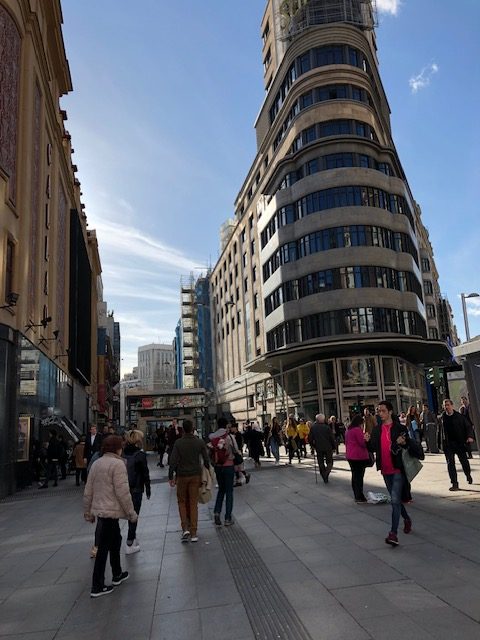
There is a difference between an expensive vacation and a great vacation.
Some of the best travel experiences are absolutely worth spending more for. Others are expensive simply because someone figured out that travelers will pay for them. Knowing the difference can completely change not only what a trip costs, but how it feels.
I don’t believe every vacation needs to be luxurious. I also don’t believe in spending thousands of dollars to travel somewhere incredible and then making every decision based on finding the cheapest possible option.
The sweet spot is somewhere in between:
Spend where the money meaningfully changes the experience. Save where it doesn’t.
That sounds simple. In practice, it requires deciding what actually matters to you before you start booking.
Splurge: The Flight When It Changes the Trip
I am not going to tell you that everyone needs to fly business class. They don’t.
But there are times when spending more on a flight makes sense.
A nonstop flight instead of two connections may give you another half-day of your vacation. A better departure time might mean arriving rested enough to enjoy your first day instead of stumbling through it. Premium economy on a long-haul flight can sometimes be the difference between tolerable and miserable.
And occasionally, yes, the lie-flat seat is worth it.
The question isn’t whether the more expensive ticket is “better.” Of course it is. The question is whether the improvement is worth the difference for this particular trip.
For our wedding, I told my fiancé—now my husband—that we were splurging on the flights. I was not flying from Anchorage, Alaska, to Miami, Florida, and arriving ragged, tired and unhappy. There are times when getting there comfortably is part of the trip.
I’m also much more willing to spend money on the outbound flight of a major international trip than I am on a three-hour domestic flight. Arriving exhausted at the beginning of a trip I’ve spent months anticipating doesn’t feel like particularly good value to me.
On the way home? My standards may suddenly become much more flexible.
Save: The Upgrade That Doesn’t Actually Matter
Not every upgrade deserves your money.
Before paying for priority boarding, an upgraded fare category, lounge access, a premium seat or another airline add-on, look at what you’re actually receiving.
Sometimes $75 buys something genuinely useful.
Sometimes it buys the privilege of getting onto the same airplane seven minutes earlier.
Those are not the same thing.
Splurge: Location, Location, Location
One of the places I am most willing to spend more is on where I’m staying, but that doesn’t necessarily mean booking the fanciest hotel.
I’d rather have a very good hotel in an excellent location than an extraordinary hotel inconveniently located from everything I want to experience.
Location buys something incredibly valuable on vacation: time.
If staying in the right neighborhood means we can walk to dinner, stop at the hotel in the afternoon, explore spontaneously and avoid spending an hour every morning getting somewhere, that room may be worth considerably more than its nightly rate suggests.
A beautiful hotel 45 minutes outside the action may look like the bargain. Then you start paying for taxis, car rentals and train tickets.
And losing hours.
And deciding not to go back out because getting there is annoying.
Suddenly, the bargain isn’t such a bargain.
Save: The Room Category
Here’s where I often go the other direction.
Do I need the suite?
Maybe.
But probably not.
If we’re going to be out exploring most of the day, I care far more about a comfortable bed, cleanliness, good service, quiet at night and a great location than having another 300 square feet of hotel room.
In Granada, we stayed in a tiny studio that suited all of our needs and was fantastically situated. The front desk brought up a full, delicious breakfast and even refilled the carafe of coffee for me. I don’t remember wishing the room were bigger. I remember the location, the breakfast and the coffee.
There are exceptions. A resort vacation is different. A special anniversary is different. A room with an extraordinary view can absolutely become part of the experience.
But if I’m spending twelve waking hours outside the hotel, I don’t automatically need its most impressive room.
Put that money somewhere I’ll remember it.
Splurge: Experiences You Cannot Recreate
This is probably the category where I am most enthusiastic about spending money.
A private guide who helps you understand something you never would have appreciated on your own. A helicopter flight over a landscape you’ve wanted to see for years. A cooking class with someone who teaches you about their culture while teaching you what is going into the pan.
A small boat instead of a packed excursion.
A spectacular spa in a place known for it.
A wine experience where you’re sitting with someone who actually knows the vineyard rather than simply being poured four glasses at a counter.
These are the things that often become the stories you tell years later.
If an experience is genuinely unique to the destination and deeply connected to why I traveled there in the first place, I would much rather spend money there than indiscriminately upgrade everything else.
Save: Experiences You’re Booking Because You Think You Should
This is the other side of that philosophy.
You do not have to do something simply because every “Top 10 Things to Do” list says you should.
If you hate museums, you don’t need to spend hundreds of dollars on a private museum tour because you’re in Paris.
If you don’t care about wine, don’t book the expensive vineyard excursion because Tuscany is famous for wine.
And if getting up at 4:30 in the morning for a sunrise experience sounds absolutely miserable to you, perhaps your vacation doesn’t need one.
There is no prize for completing the destination checklist.
Spend money on the experiences that make you excited to go.
Splurge: A Really Good Meal
I love food as part of travel.
That does not mean every dinner needs a Michelin star. In fact, some of the meals I enjoy most when traveling are remarkably simple.
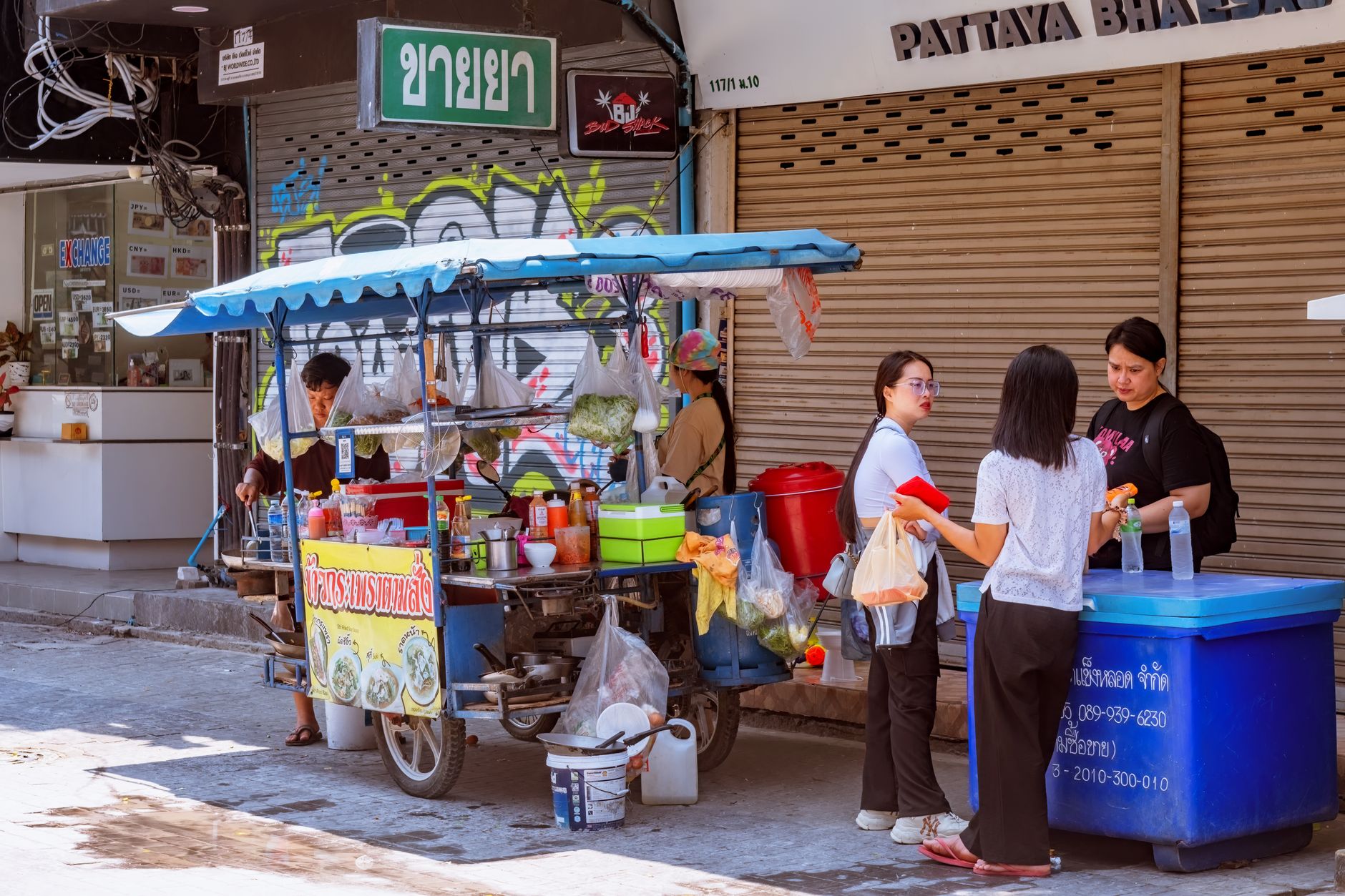
In Thailand, everywhere we went seemed to have little food stalls that cost almost nothing and served some of the best food of the trip. That’s part of the joy of traveling: incredible food doesn’t always come with white tablecloths and an impressive bill.
But I like leaving room in the budget for at least one meal that is an event.
Maybe it’s the tasting menu. Maybe it’s the restaurant with the impossible reservation. Maybe it’s lunch overlooking a vineyard, dinner on the water or a chef’s counter where you can watch everything happen.
Food can tell you an enormous amount about a place, and when the meal itself becomes part of the travel experience, I think it’s worth spending on.
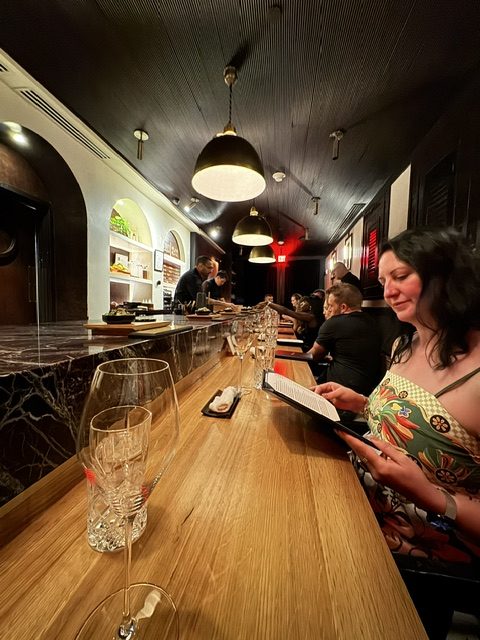
Mike and I were staying at the Esmé in South Beach, Miami, during my birthday. While I was touring the hotel, the sales manager found out we were celebrating and offered to help us get reservations at Sushi | Bar Miami Beach inside the hotel.
Let’s just say: $$$$$.
Our tastebuds have never forgotten it.
It was the best sushi we have ever eaten—sorry, Nobu—the service was next level, and the memory has stayed with us. That’s exactly the kind of splurge I mean. I don’t need every meal on vacation to cost that much. I want the occasional one to be worth remembering.
Save: Eating Every Meal Like It’s an Event
Three elaborate restaurant meals a day is not my idea of vacation.
Sometimes breakfast should be coffee and something wonderful from the bakery around the corner. Lunch might be something from a market. And sometimes you just need pizza, noodles, a sandwich or whatever the local version of quick comfort food happens to be.
Besides saving money, casual meals often lead you into places you might otherwise miss.
You don’t experience a destination only through its most expensive restaurants.
Splurge: Convenience When Convenience Buys You Time
Convenience is one of the most underrated travel luxuries.
I’m willing to pay for a private airport transfer when we arrive somewhere unfamiliar after a long international flight.
I’m willing to pay for the train that takes two hours instead of the one that takes five.
I’m willing to pay for a tour that handles complicated logistics when figuring them out myself would consume half a day.
That doesn’t mean I need a driver waiting outside the hotel every morning. It means I understand that vacation time has value.
Saving $60 while sacrificing four hours of a trip isn’t necessarily saving $60.
On our first trip to Spain, we splurged on the high-speed train from Madrid to Sevilla, where our road trip began. Instead of dealing with driving and parking in Madrid, we picked up our rental car in Sevilla.
The train was so comfortable that we sat back and watched the countryside go by. They brought us a meal with Spanish wine and olive oil, and what could have simply been transportation became one of our favorite parts of the trip.
That’s a splurge doing exactly what a splurge should do: making the trip better.

Save: Convenience You Can Easily Handle Yourself
On the other hand, travel doesn’t need to be completely frictionless.
If the metro is safe, inexpensive and easy to use, take it.
If the hotel is ten minutes from the train station, you probably don’t need a private car.
If tickets can easily be purchased directly, you may not need a third-party package charging twice the price.
Spend on convenience when it removes a genuine hassle, not simply because it’s labeled “VIP.”
Splurge: The Thing You Came Here For
This might be my biggest rule.
If there is one thing that made you choose the destination, do not cheap out on that thing.
If you’re going to Tanzania or Botswana because you’ve dreamed of going on safari, this isn’t where I would choose the bare-minimum experience.
If you’re going to New Zealand because you’ve dreamed of seeing its landscapes from the air, budget for the helicopter.
If you’re a lifelong Formula 1 fan and you’re finally attending a Grand Prix, perhaps those seats matter more than the hotel.
If food is the reason you’re going to Japan, make room for the meals.
This is where generic travel budgets fail.
Two people can take exactly the same trip and should spend their money completely differently.
A budget is a good thing to have, but think of it as a seesaw:
When you splurge here, you tighten there.
That’s how you make room for the things that actually matter.
Save: The Things You Don’t Care About
This is just as important.
I don’t believe in spending money simply because something is considered luxurious.
If you couldn’t care less about the hotel pool, don’t pay an extra $200 a night for the resort with the spectacular pool.
If you sleep beautifully in economy, congratulations. Keep the money.
If shopping isn’t part of your travel experience, don’t create a shopping budget because some itinerary says you need one.
If you’re perfectly happy taking the train from the airport, take the train.
Luxury is not about upgrading everything.
It’s having the freedom to spend more on the things that matter to you and less on the things that don’t.
Get on the Same Page as Your Travel Companions
Where you splurge and where you save only works if everyone on the trip gets a say.
Take location.
I will happily walk a city like Madrid and average about ten miles a day.
My husband would rather not.
In Passau, I made him climb the long staircases up to the castle, only to discover a parking lot right next to the restaurant where we were having dinner.
We could have driven.

He has never let me forget this.
Before you book, talk through what matters to each person, because what is important to one traveler isn’t necessarily important to another.
On a family trip to Germany, we stopped at a mall where I tried on and bought some clothes. My husband was off to the side, fuming that we shouldn’t waste our time in a mall when there were “better” things to see.
I finally had to take him aside and remind him that he wasn’t the only person on the trip.
Of course, this is also the man who drags me to World War II monuments that bore me to tears, at which point I have to remind myself of exactly the same thing.
Traveling together requires compromise.
One person’s “waste of vacation time” may be another person’s thing they’ve been looking forward to all day. The goal isn’t for everyone to value the same things. It’s to know what matters to each other before you’re standing in another country arguing about it.
Splurge Before You Go When It Prevents Problems Later
There is another category that isn’t particularly glamorous but deserves a place in the budget.
The boring stuff.
Travel insurance when appropriate. The right luggage. Comfortable shoes. International phone and data access. Necessary vaccinations or medications. Passport and entry requirements handled correctly and well ahead of departure.
None of these will produce the photograph you frame when you get home.
But they can determine whether you get to enjoy the vacation you paid for.
There is a difference between cutting unnecessary expenses and cutting corners.
The Question I Ask: Will I Notice the Difference?
When I’m deciding whether something is worth the upgrade, this is one of the simplest questions I can ask:
Will I actually notice the difference?
Will I notice the difference between a hotel ten minutes from everything and one 45 minutes away?
Absolutely.
Will I notice the difference between a standard room and the next room category up that’s essentially identical except for its name?
Maybe not.
Will I notice a private guide at an archaeological site I’ve dreamed of visiting?
Absolutely.
Will I care that my airport transfer was a luxury sedan instead of a perfectly comfortable regular car?
Probably not.
That’s where spending well becomes personal.
Create a “Worth It” Budget
Instead of thinking only in terms of categories—$2,000 for hotels, $1,000 for food, $1,500 for activities—I like the idea of identifying your “worth it” items before you go.
Ask everyone traveling one question:
What are the three things you would be disappointed to come home without experiencing?
Those answers tell you a lot.
Perhaps one person says business class, a beautiful hotel and a spa day.
Someone else says street food, scuba diving and a private photography tour.
Neither is traveling incorrectly.
Once you know what matters, you can build the budget around those priorities instead of spreading money evenly across things you don’t value equally.
The Short Version
Splurge on: flights that give you back time or energy; a great location; experiences you can’t recreate; one memorable meal; convenience that saves you hours; and the thing you came for.
Save on: add-ons that don’t change much; a bigger room you’ll barely use; bucket-list items you don’t actually care about; eating every meal like it’s an event; convenience you can easily handle yourself; and luxury for its own sake.
And remember the seesaw:
Splurge here. Tighten there.
A Great Vacation Isn’t the Most Expensive Version
The goal isn’t to spend as little as possible.
And it certainly isn’t to spend as much as possible.
The goal is to come home feeling like the money you spent made the trip better.
I will happily sit in a tiny neighborhood restaurant one evening and spend far too much money on dinner the next.
I’ll take public transportation across a city and pay for a private guide when expertise changes what I’m seeing.
I’ll choose the smaller hotel room in the neighborhood I love and use the savings for an experience I couldn’t have anywhere else.
That isn’t budget travel.
It isn’t luxury travel, either.
It’s intentional travel.
And to me, that’s the real art of spending well on vacation.
About Samantha
Samantha is a travel advisor who believes the best trips aren’t necessarily the most expensive ones—they’re the ones planned around what matters to the people taking them. She specializes in thoughtful, experience-driven travel with a healthy appreciation for excellent food, beautiful places and knowing when something is actually worth the splurge.


